Influencer Marketing
AI Ads
How AI Animated Ads for Brands Win More Tests
AI animated ads for brands can speed creative testing, fight fatigue, and improve paid acquisition when concepts, controls, and measurement stay sharp.
A paid social feed gives an advertiser seconds to earn attention. That is why AI animated ads for brands are becoming a serious acquisition format, not a novelty production trick. Used well, they turn a tested insight into multiple platform-native executions fast enough to keep pace with creative fatigue. Used badly, they produce generic motion, inconsistent products, and another expensive asset that never leaves the test budget.
The difference is not the model. It is the operating system behind it: strong creative strategy, clear claims, platform-specific editing, and a media team that knows what to measure. AI can compress production time. It cannot invent customer insight or rescue a weak hook.
Why AI Animated Ads for Brands Are Gaining Ground
Traditional animation can be the right answer for a flagship launch, a high-polish brand campaign, or a Connected TV spot with a longer shelf life. It is also slower to revise. When a TikTok concept needs five opening hooks, three visual metaphors, two offers, and versions for different audiences, a conventional workflow can make iteration too expensive.
AI animation changes the economics of exploration. A health app can visualize an abstract outcome like calmer mornings without organizing a full lifestyle shoot. A subscription brand can create motion around a product benefit before inventory arrives in studio. A mobile game can turn a playable moment, character, or progression mechanic into fresh visual routes without rebuilding every scene from scratch.
That matters because performance creative does not need one perfect ad. It needs a repeatable pipeline of informed tests. The goal is to create enough meaningful variation to find the combination of hook, proof, pacing, and call to action that reduces cost per acquisition or increases return on ad spend.
Speed has a limit, though. More assets are not more tests if every version says the same thing. Changing colors, camera angles, or background music may refresh an ad visually, but it rarely creates a new strategic hypothesis. A useful AI-animated test changes what the viewer understands, feels, or expects in the first few seconds.
Start With the Performance Question
Before generating a frame, define the question the ad must answer. For an app with weak trial conversion, the question may be whether users respond better to outcome proof or a clearer product demonstration. For a game with rising install costs, it may be whether a fail-state hook outperforms a power-fantasy hook. For a wellness subscription, it may be whether a founder-led promise can be strengthened with animated proof points.
That question should determine the concept. Not the other way around.
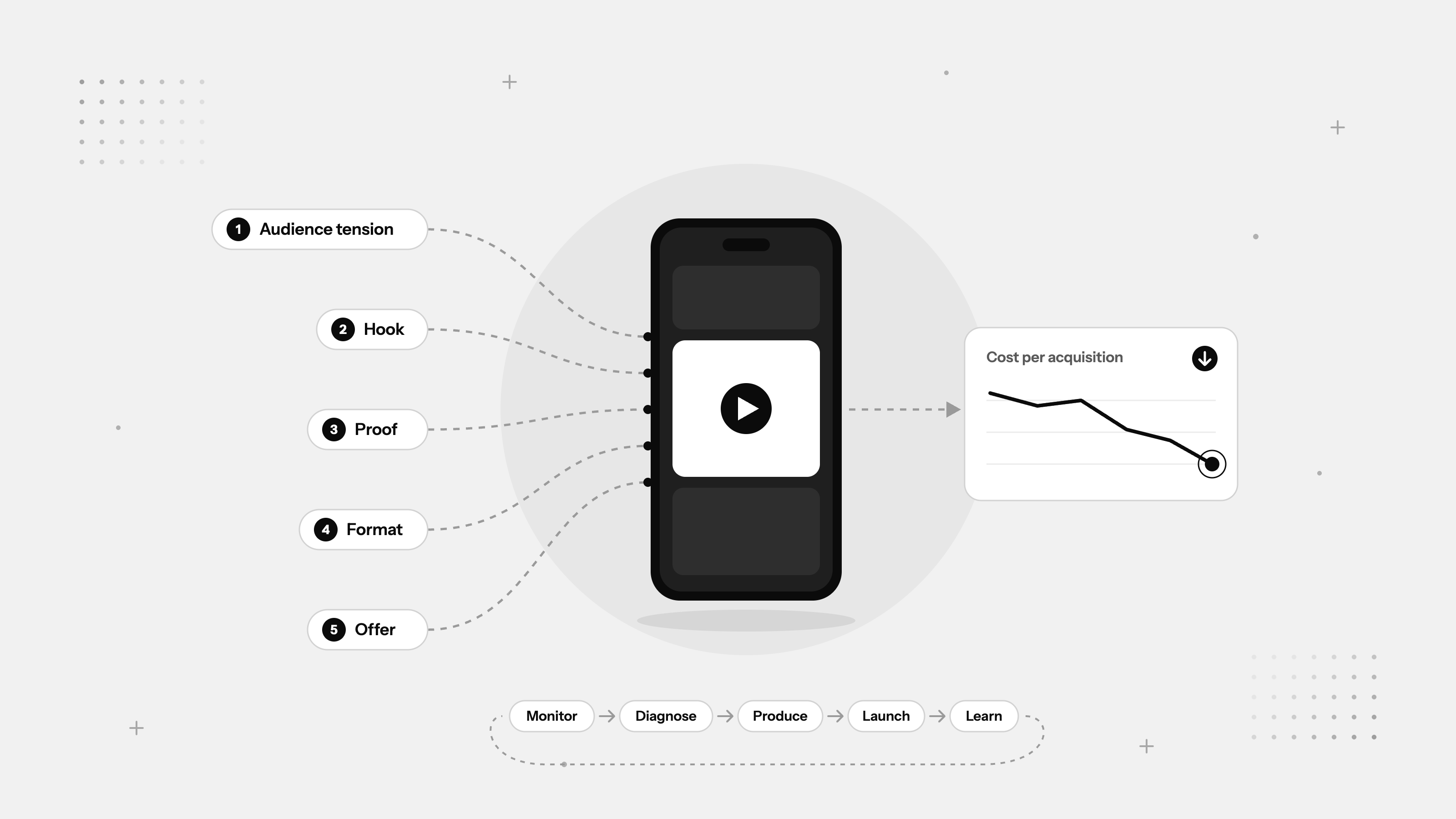
A practical brief for AI animation includes the audience, the funnel stage, one core claim, the visual mechanism, the required product details, and the success metric. If the ads will run on Meta, TikTok, and YouTube Shorts, the team should also identify what must change by placement. A tight 9:16 TikTok execution may open with a disruptive visual loop, while a Meta prospecting version may need clearer on-screen benefit language before the viewer scrolls.
This is where integrated execution pays off. Creative strategy should be informed by account data: declining thumb-stop rate, a winning creator narrative, search themes, audience objections, or a competitor angle that is becoming overused. Production disconnected from media buying tends to optimize for the handoff. Production connected to media optimizes for the next decision.
Build Ads Around Hooks, Not Effects
The most common mistake with AI animation is treating visual novelty as the concept. A morphing product pack, surreal landscape, or impossible camera move can earn a glance. It will not automatically earn a click, install, or purchase.
Start with a hook that carries commercial weight. For example, a finance app might lead with the tension of watching small subscriptions drain a balance. An animated stream of charges can make the problem immediate, then transition into the product experience. A kids gaming platform might use character motion and gameplay stakes to show the reward of progressing, while keeping the advertised experience accurate and age-appropriate.
The animation should make the message easier to absorb. It can visualize an invisible benefit, exaggerate a pain point, simplify a product flow, or create a pattern interrupt that supports the claim. If removing the animation does not change the idea, the execution may be decoration rather than performance creative.
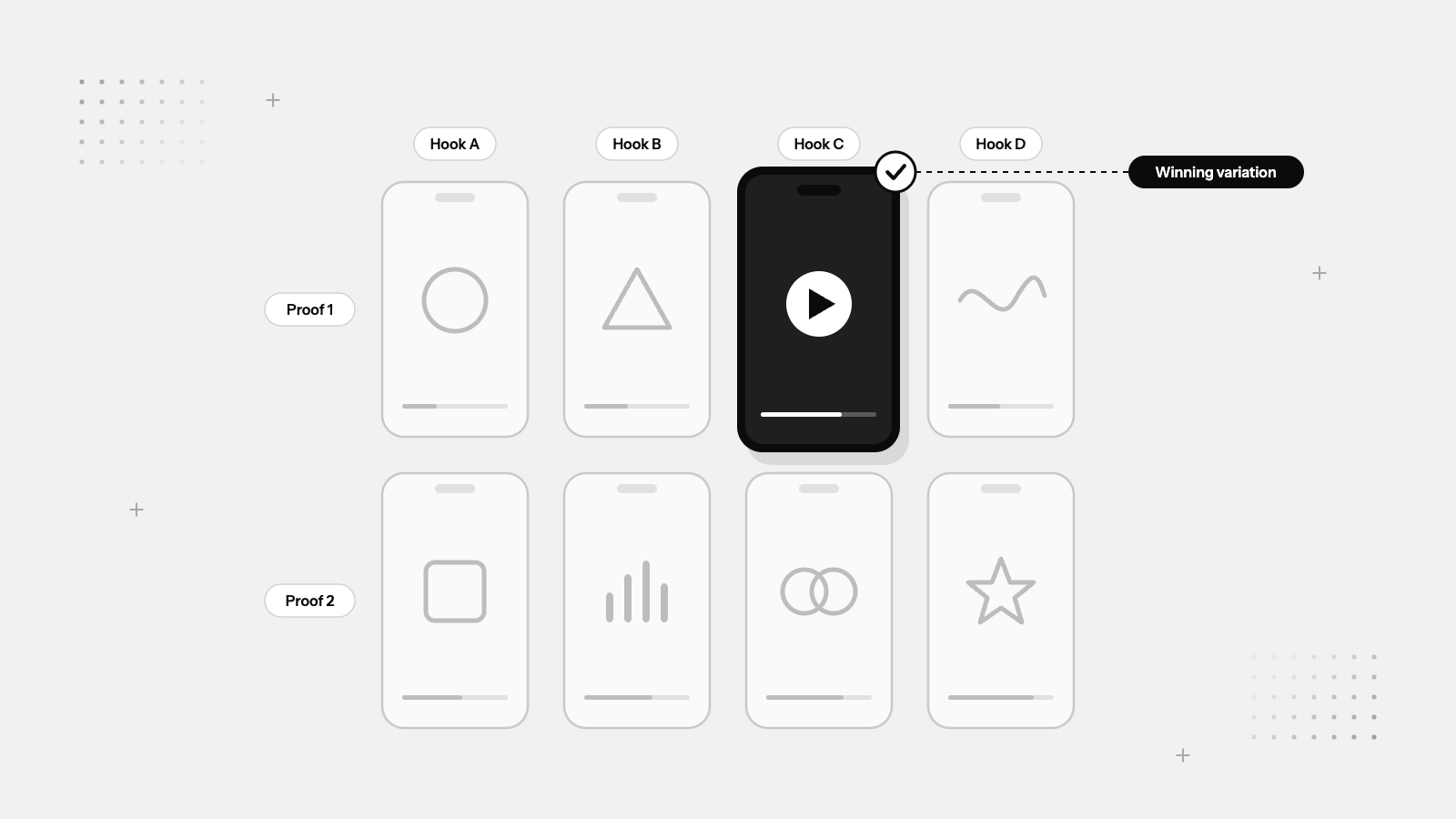
For direct-response placements, the first three seconds deserve disproportionate attention. Test alternate openings against the same body, not entirely unrelated ads at once. This helps isolate whether the hook, rather than an accidental difference in length or offer, is driving the result.
Protect Product Truth and Brand Control
AI-generated motion can create details that look plausible but are wrong: altered logos, fictional interfaces, impossible feature behavior, or product claims no legal team would approve. For performance advertisers, those errors are not just brand issues. They can increase negative comments, hurt conversion quality, trigger platform review problems, and waste media spend.
Build a control layer into the workflow. Use approved brand elements and verified product captures as source material. Keep claims tied to substantiation. Define visual guardrails for color, typography, packaging, character behavior, and prohibited scenarios. Then assign a real reviewer who can reject an output that looks impressive but misrepresents the product.
The right level of control depends on the category. A mobile game can often take bigger visual swings than a health or financial product. Regulated and trust-sensitive categories need tighter claim review, clearer disclosures where required, and more reliance on actual product footage or interface capture. AI animation can still add value there, especially for transitions, explanatory metaphors, and motion systems, but it should not invent the proof.
Design a Test Matrix That Produces Learning
A healthy creative pipeline separates strategic variables from production variables. Test one or two major ideas, then create enough executions to give each idea a fair shot. If a concept wins, expand it into new openings, proof formats, creator voiceovers, and calls to action. Do not move on simply because the first batch looked polished.
For example, a subscription app could test three distinct territories: the cost of the current problem, the emotional outcome after using the product, and a screen-led demonstration of how it works. Within each territory, AI animation can create variations in the opening visual and pacing. That gives the media team a usable read on message-market fit instead of a pile of disconnected assets.
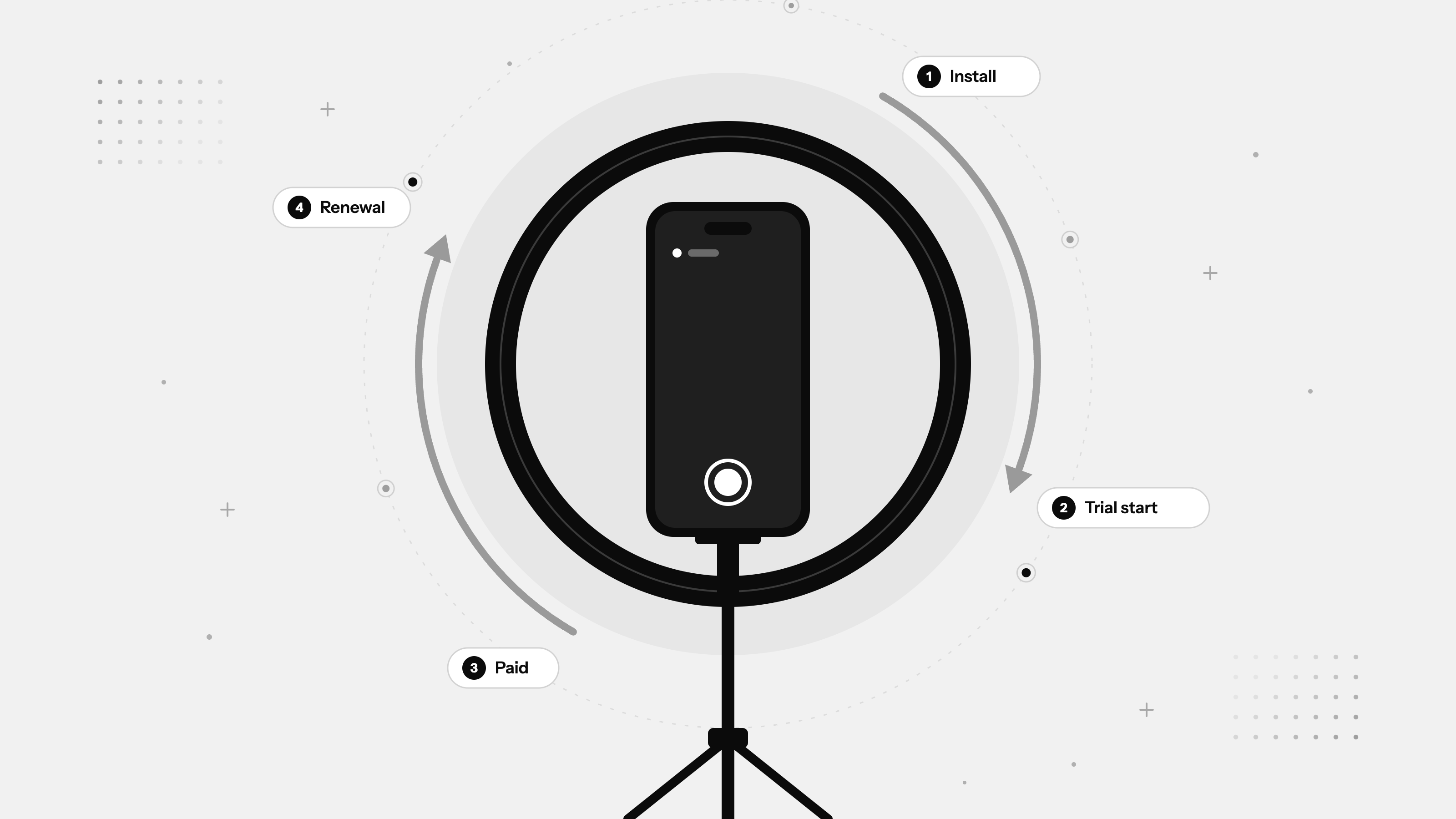
Measure beyond click-through rate. Strong click-through with weak trial starts may signal that the hook oversold the experience. Cheap installs with low downstream activation may point to the wrong audience or an unclear onboarding promise. The best ads create congruence from the first frame through the landing page, app store listing, and product experience.
Creative results should also be read by platform, audience, and fatigue curve. An ad that wins in broad Meta prospecting may fail with a creator-first TikTok audience. An execution that starts strong can decay quickly once frequency rises. AI animation is valuable partly because it gives teams a faster way to refresh a proven territory before performance falls apart.
Where AI Animation Fits in the Mix
AI animation is not a replacement for UGC, gameplay capture, product demos, or professionally produced video. It is another high-leverage format in the creative system.
UGC often wins when trust, social proof, and a human point of view are central to the sale. Product capture wins when the interface or physical experience is the proof. High-end production wins when brand perception and visual craft need to carry the message. AI animation is especially effective when a team needs conceptual range, faster iteration, or a visual way to explain something that cannot easily be filmed.
The strongest campaigns combine formats around one strategic idea. A creator can state the problem, an AI-animated sequence can make that problem visible, and a real product demo can close the proof gap. That is more persuasive than forcing a single format to do every job.
At Scrolling Media, the standard is simple: creative is delivered ready to run, then judged by what it does in market. An AI-animated asset is only useful if it creates a stronger testing opportunity and gives the team a clearer next move.
The next time creative fatigue hits, do not ask for more motion. Ask which customer tension has not been tested, what proof the audience still needs, and how quickly your team can turn that answer into a clean live experiment. That is where AI animation earns its place in the acquisition stack.