Creative Strategy
Creative Strategy
Connected TV Ads for Apps That Drive Installs
Connected TV ads for apps build demand, improve paid social efficiency, and drive measurable installs when creative, targeting, and measurement fully align.

Your next mobile user may see your ad on a 65-inch screen before they ever open TikTok or search the App Store. That is the real opportunity behind connected TV ads for apps: not a prettier version of traditional TV, but a high-attention demand channel that can make every downstream acquisition channel work harder.
For app marketers, CTV is often filed under awareness and dismissed as difficult to measure. That framing leaves growth on the table. Streaming inventory can introduce an app, establish the product payoff in seconds, and create the familiarity that improves click-through and conversion rates when that same user encounters your ads on mobile later.
The catch: a polished commercial is not automatically a performance ad. If the creative has no hook, the media plan has no audience logic, or measurement stops at impressions, CTV becomes an expensive branding exercise. Built correctly, it becomes a measurable part of an acquisition system.
Why connected TV ads for apps are different
Connected TV reaches viewers through streaming environments rather than linear broadcast. Think ad-supported streaming apps, smart TV inventory, and premium video placements delivered to addressable households. The viewer is leaning back, the screen is large, and the ad has fewer competing distractions than a feed placement.
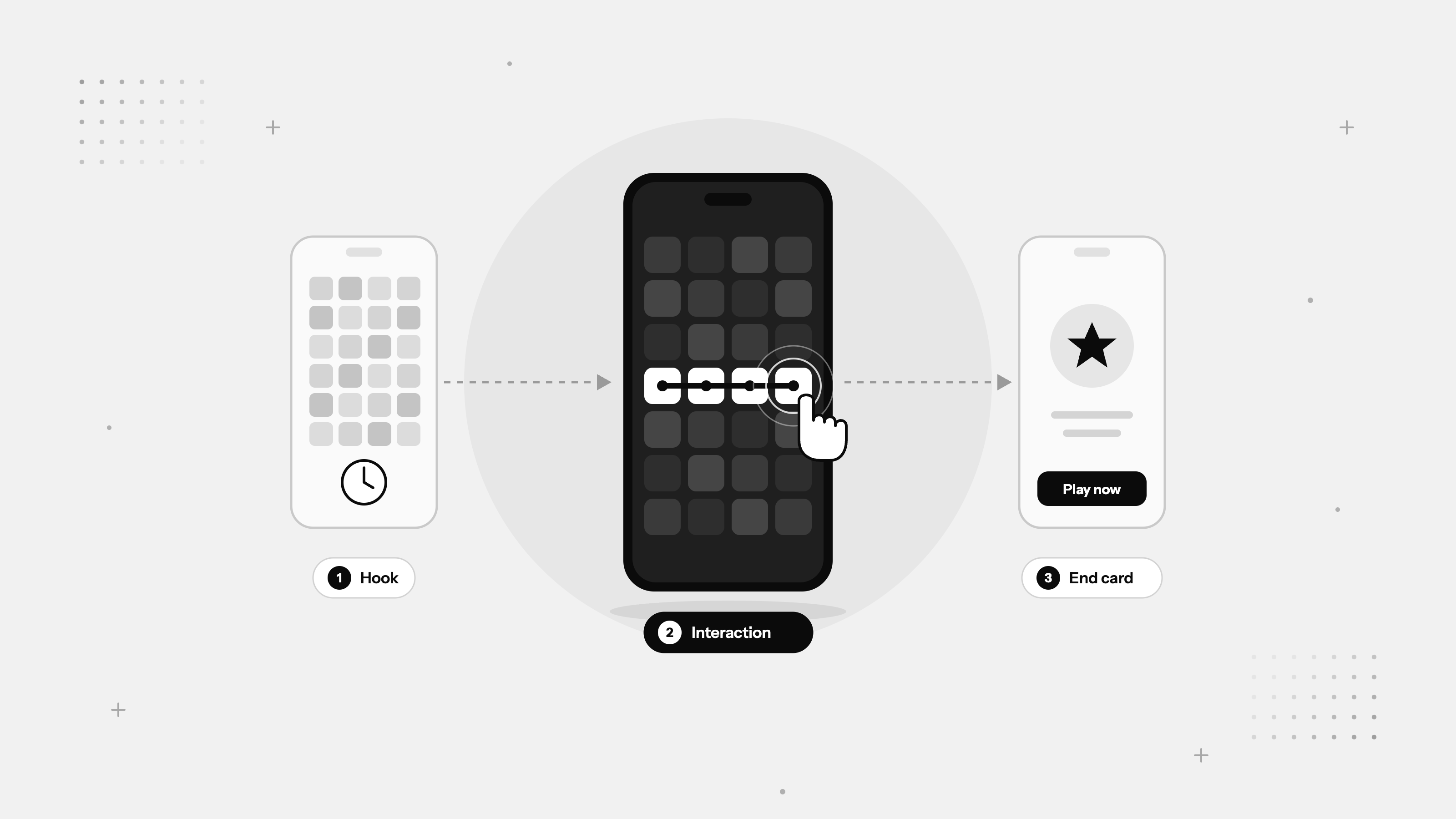
That changes the job of the creative. On paid social, a creative may have a second to interrupt a scroll. On CTV, you have room to create tension, show a product transformation, establish credibility, and make the app memorable. But you still need to earn attention fast. The first three seconds matter because viewers can mentally tune out even when they cannot swipe past.
For subscription apps, health and wellness products, mobile games, and kids gaming platforms, this environment is especially useful when the product needs context. A meditation app can show the before-and-after feeling of a nightly routine. A game can show actual gameplay, a player decision, and the payoff. A fitness app can turn an abstract promise into a recognizable moment: the workout that fits into a busy day, not another impossible plan.
CTV is not a replacement for Meta, TikTok, or Google. It works best as a demand generator that supports the channels built to capture intent and drive direct response. That distinction should shape both budget expectations and reporting.
Start with the acquisition problem, not the TV spot
The weakest CTV campaigns start with a production brief: “We need a 30-second commercial.” The better question is, “What performance constraint are we trying to change?”
Maybe paid social is saturated and your best audiences have seen too many variations of the same offer. Maybe branded search is rising but you cannot explain why. Maybe your app has a strong retention story that static ads cannot communicate. Or maybe a new product category requires more education before users are ready to install.
Each problem calls for a different CTV role. If frequency and creative fatigue are driving up CPMs on social, use CTV to widen qualified awareness while retargeting exposed audiences with mobile-native direct-response ads. If trial conversion is weak because users misunderstand the value proposition, use CTV to demonstrate the product experience before asking for the install.
The media objective should also be explicit. Are you optimizing for efficient reach among a defined audience, completed video views, site visits, app installs, or incremental lift? A campaign can support more than one outcome, but it should have one primary decision metric. Without that, teams tend to celebrate reach when CPA rises, or reject a campaign with strong incremental impact because it did not receive last-click credit.
Build creative that earns the screen
TV-quality production does not mean slow, generic brand storytelling. It means the footage, pacing, sound, and product presentation are built for a premium full-screen environment. Performance discipline still applies.
Start with a clear audience tension. For a sleep app, that may be 2 a.m. scrolling and another failed attempt to fall asleep. For a mobile game, it may be the split-second choice that turns a near-loss into a win. For a subscription product, it may be the frustration of paying for solutions that create more work.
Then get to the product quickly. Show the interface, gameplay, or actual use case rather than saving it for the final five seconds. App marketers have an advantage here: the product can often be the story. Real screens, real gameplay, creator-led demonstrations, and motion graphics can do more work than a vague lifestyle montage.
A practical CTV creative system usually includes 15-, 30-, and 60-second cuts. The 15-second version proves whether the hook and core benefit land. The 30-second version has room for a product demonstration and a stronger emotional arc. The 60-second version is useful when education matters, but it should not be your default simply because the inventory allows it.
Test concepts, not minor edits. Changing a background color or moving the logo will rarely explain performance. Compare different audience tensions, product proofs, offers, creator angles, and endings. Stop testing ads. Start testing hooks.
Design the campaign around the full funnel
CTV does not create a clickable path on every placement, so the conversion path must be planned before launch. A QR code can help, especially for apps with a strong landing page or web-to-app flow, but it is not the strategy by itself. Tiny codes, rushed end cards, and no reason to scan turn a QR code into decoration.
Make the next step obvious. Use a short, readable call to action. Give viewers a specific payoff for acting now. Then make sure the landing experience matches the ad promise. If the commercial sells a free workout plan, do not send users to a generic home page with six competing messages.
The stronger play is coordinated sequencing. Run CTV against your priority audience, then serve tailored mobile ads to exposed households or audience segments where platform capabilities allow. Align messaging across YouTube, paid social, search, and app store assets. Someone who saw the CTV ad should recognize the same product promise immediately when they encounter the next touchpoint.
This is where fragmented teams lose efficiency. A production partner may make a strong video without visibility into acquisition data. A media team may buy reach without enough creative volume to learn. An integrated growth team can connect the hook used on TV to the variations running in social, creator content, and retargeting.
Measure lift, not just last-click installs
CTV attribution is imperfect. Device graphs, household matching, view-through windows, and platform reporting can all be useful, but none should be treated as absolute truth. The right measurement approach depends on budget, audience scale, channel mix, and whether the app has a meaningful web conversion path.
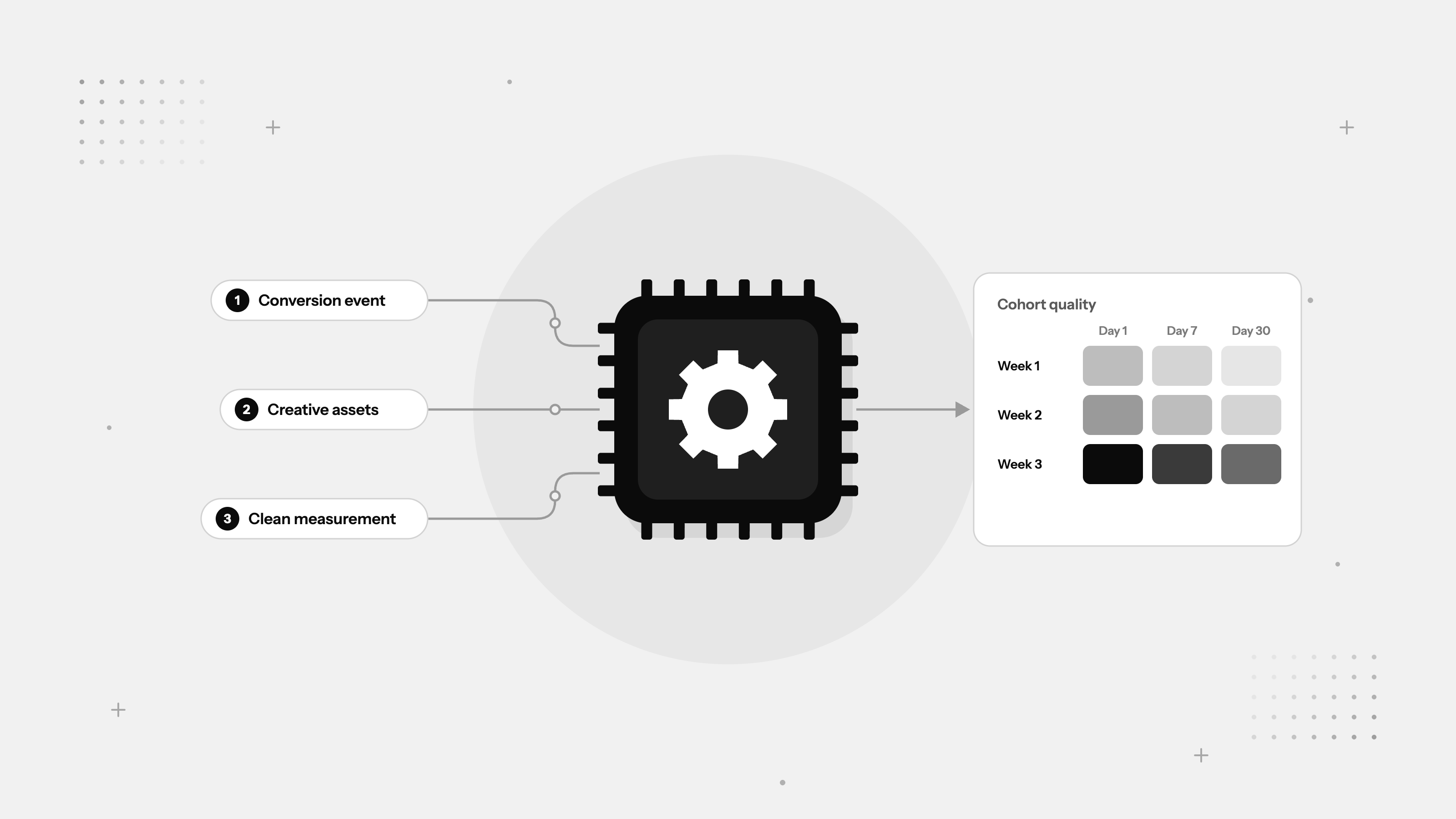
At a minimum, monitor install volume, trial starts, purchases, and cost efficiency in the periods and markets where CTV runs. Look for movement in branded search, direct traffic, organic installs, and the efficiency of paid social retargeting. Those signals can reveal demand creation that a last-click dashboard will miss.
For larger budgets, use geographic holdouts or matched-market tests. Keep comparable regions unexposed, then compare incremental outcomes rather than reported conversions alone. If CTV increases total trial starts while paid social CPA falls in exposed markets, that is more valuable evidence than a platform-reported view-through conversion count.
Also judge quality after the install. A cheap install that never completes onboarding is not a win. Track trial-to-paid conversion, early retention, purchase rate, and projected LTV by exposure cohort where possible. CTV can reach a broad audience quickly, so the discipline is not only finding scale. It is finding scale that produces customers worth acquiring.
When CTV is worth the budget
CTV is most compelling when an app has a clear product story, enough conversion data to evaluate downstream impact, and a media budget that can generate meaningful reach. A tiny test spread across too many publishers, audiences, and markets will produce noise rather than learning.
That does not mean smaller advertisers should ignore the channel. It means they should test with focus: one audience, one or two markets, a limited set of strong concepts, and a measurement plan that looks beyond platform attribution. If direct-response channels are already working and the challenge is scaling without destroying CPA, CTV may be the next lever.
The goal is not to make an app look like a household name for its own sake. The goal is to make the next impression, search, click, and install easier to win. Treat CTV as part of the acquisition engine, give it creative built to perform, and demand evidence that it is creating real growth.