Mobile Games Ads
Mobile Games Ads
HTML5 Playable Ads for Games That Win Installs
HTML5 playable ads for games turn gameplay into a measurable acquisition lever. Learn how to build, test, and scale experiences that lower CPI over time.
A 15-second gameplay video can show players what your game looks like. An interactive ad can show whether they actually want to play it. That difference matters when creative fatigue is pushing CPIs up and media teams need more than another edited trailer. HTML5 playable ads for games put the core loop in a prospective player’s hands before the install.
For mobile studios, playables are not a novelty format. They are a qualification tool. The right experience gives users a small, satisfying win, frames the progression fantasy, and hands paid media a stronger signal than a passive view ever could. The wrong experience burns production time, misrepresents the game, and attracts installs that disappear before day one.
Why HTML5 Playable Ads for Games Perform Differently
A playable ad asks for intent. Users tap, drag, solve, merge, aim, or dodge. That micro-commitment filters the audience in a way autoplay video cannot. Someone who completes a basic action and chooses to install has already sampled the interaction model, understood the premise, and opted into the next step.
That does not mean every playable automatically beats video on CPI or ROAS. A polished interactive unit can have higher production costs, slower iteration cycles, and a narrower message than a strong concept-driven video. Results depend on genre, platform inventory, the quality of the first interaction, and whether the playable sets an honest expectation for the installed experience.
But when it is built around a real acquisition hypothesis, the format can improve the quality of the click. Instead of asking, “Did players watch the trailer?” growth teams can ask better questions: Did the ad communicate the game’s payoff? Which mechanic produces the strongest install rate? Are users who engage with a puzzle challenge more likely to retain?
That is where playables become performance creative, not just interactive production.
Build the Ad Around One High-Value Moment
The biggest mistake in playable development is trying to reproduce the entire game. A mobile game may have collection systems, live events, characters, guilds, progression tracks, and five different gameplay modes. Your ad has seconds to earn attention.
Choose one moment that makes the game worth installing. For a match game, that may be the chain reaction that clears a packed board. For a strategy title, it may be the decision that turns an outnumbered defense into a win. For a runner, it may be the narrowly escaped obstacle sequence. For a merge game, it may be the visible transformation from clutter to reward.
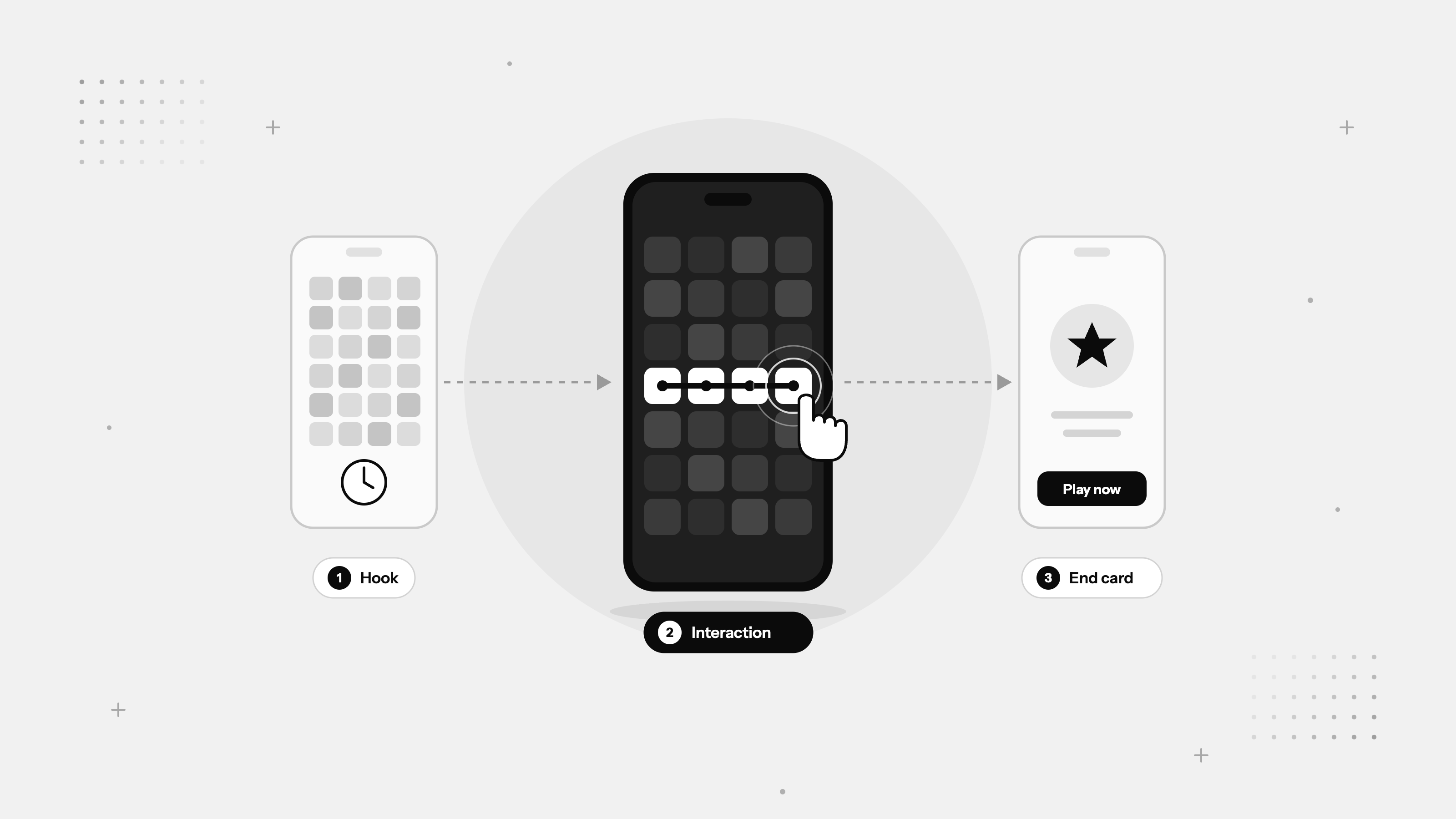
The ad needs a complete emotional arc: immediate context, a simple action, escalating tension, and a satisfying payoff. The player should understand what to do without reading a tutorial panel. If the mechanic requires a paragraph of instructions, it is probably not the right mechanic for the unit.
Start With the Hook, Not the Feature List
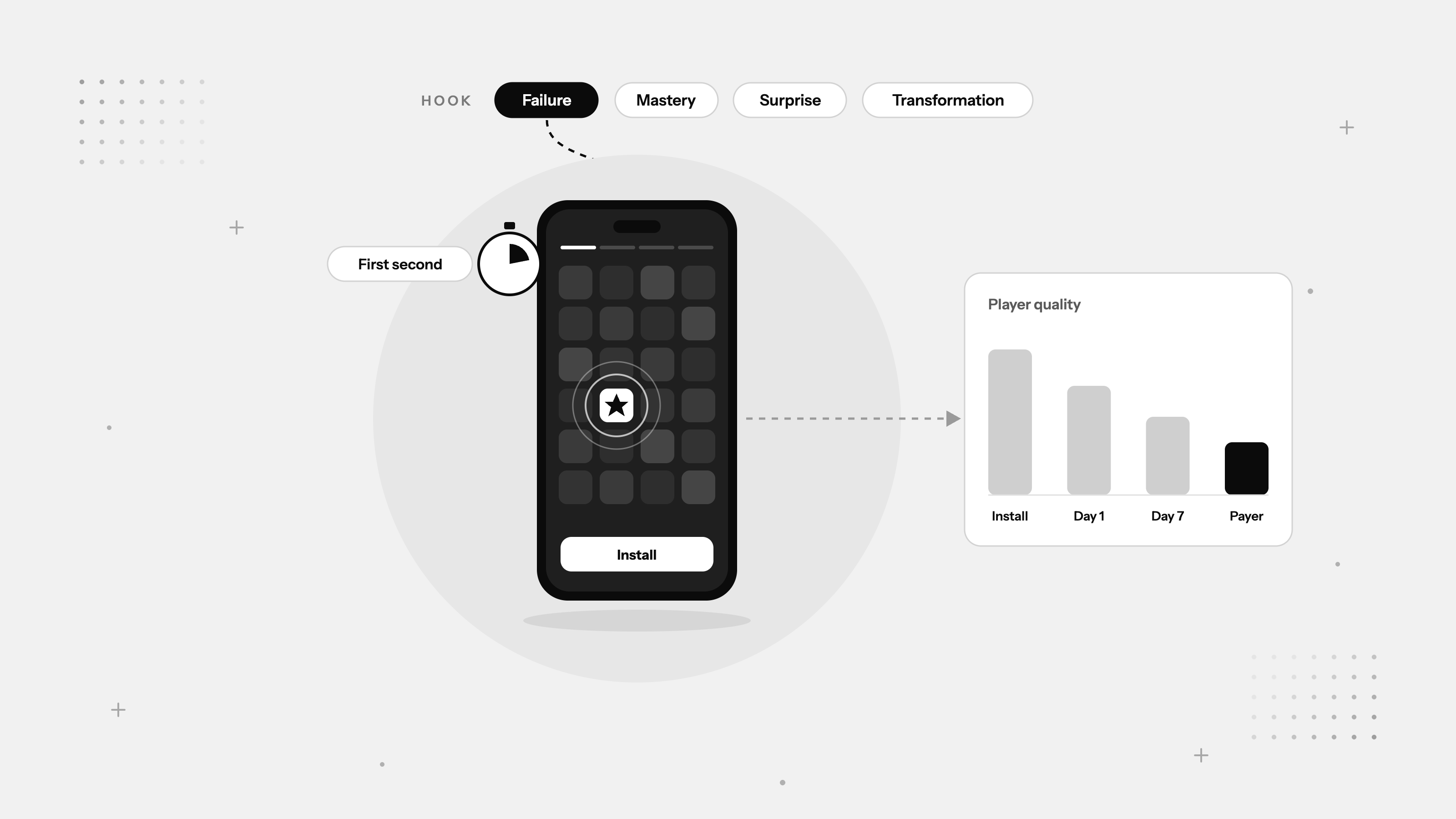
The first screen has one job: stop the scroll and establish the challenge. A crowded board, an obvious mistake, a countdown, a rare reward just out of reach, or a choice with visible consequences can all create that opening tension.
Then make the first interaction happen fast. Do not gate the action behind multiple splash screens, loading language, or a long brand animation. The player should be touching the experience within the first few seconds.
This is also where game teams need discipline. A hook that promises one genre and delivers another may generate cheap taps, but it can hurt downstream quality. The best playable exaggerates the most marketable truth about your game. It does not invent a fantasy that vanishes after install.
Make the Experience Feel Responsive, Not Decorative
HTML5 playable ads live or die on responsiveness. If a tap feels delayed, if a drag misses, or if the action lacks visual feedback, the player reads the entire experience as low quality. That perception transfers directly to the game.
Every action needs a clear response: animation, sound if the environment allows it, score movement, particle effects, enemy reaction, or a visible path toward the reward. The experience does not need console-level polish. It needs to make the player feel in control.
Design for the constraints of the ad environment. File size, load time, touch inputs, device performance, and platform specifications are not production details to solve at the end. They shape the concept from the start. A complicated physics system or oversized art package may look impressive in a test build and fail where it matters: in live delivery.
Keep the visual hierarchy clean. Mobile screens are small, and the player must recognize the objective instantly. Important controls should sit within comfortable thumb reach. Text should support the action, not explain the whole game. If the core loop is compelling, the interaction should do most of the selling.
The End Card Is Part of the Game
Many playables earn engagement and then waste it with a generic end card. That is a leak in the funnel.
The end card should continue the emotional momentum of the interaction. If the user just completed a hard level, show the next reward, the larger world, or the progression they can access by installing. If they failed, frame the install as the chance to try again, not as a dead end.
Use the call to action with intent. “Play Now” works when the ad has already made the play proposition clear. “Build Your Kingdom” may be stronger for a strategy game where ownership is the real motivator. The message should match the player’s reason for engaging, not default to a generic acquisition line.
A strong end card can also create room for honest expansion. The playable may focus on one puzzle, while the end card shows that the installed game includes collections, customization, or ongoing challenges. Just make sure the relationship is clear. The user should feel they are getting more of what they tried, not something unrelated.
Test the Hypothesis, Not Just the Asset
Too many teams treat a playable as a major launch: one concept, one build, one verdict. That approach turns a performance format into a portfolio piece.
Instead, define the question before production. You may be testing whether a fail-state hook beats a power-fantasy hook, whether direct manipulation outperforms tap-to-choose, or whether showing progression improves click-to-install conversion. One playable can generate several focused variants without rebuilding the entire experience.
Test the opening scene, difficulty curve, visual framing, reward moment, end card, and CTA. Keep enough of the unit stable to understand what changed. If every element changes at once, the result is noise.
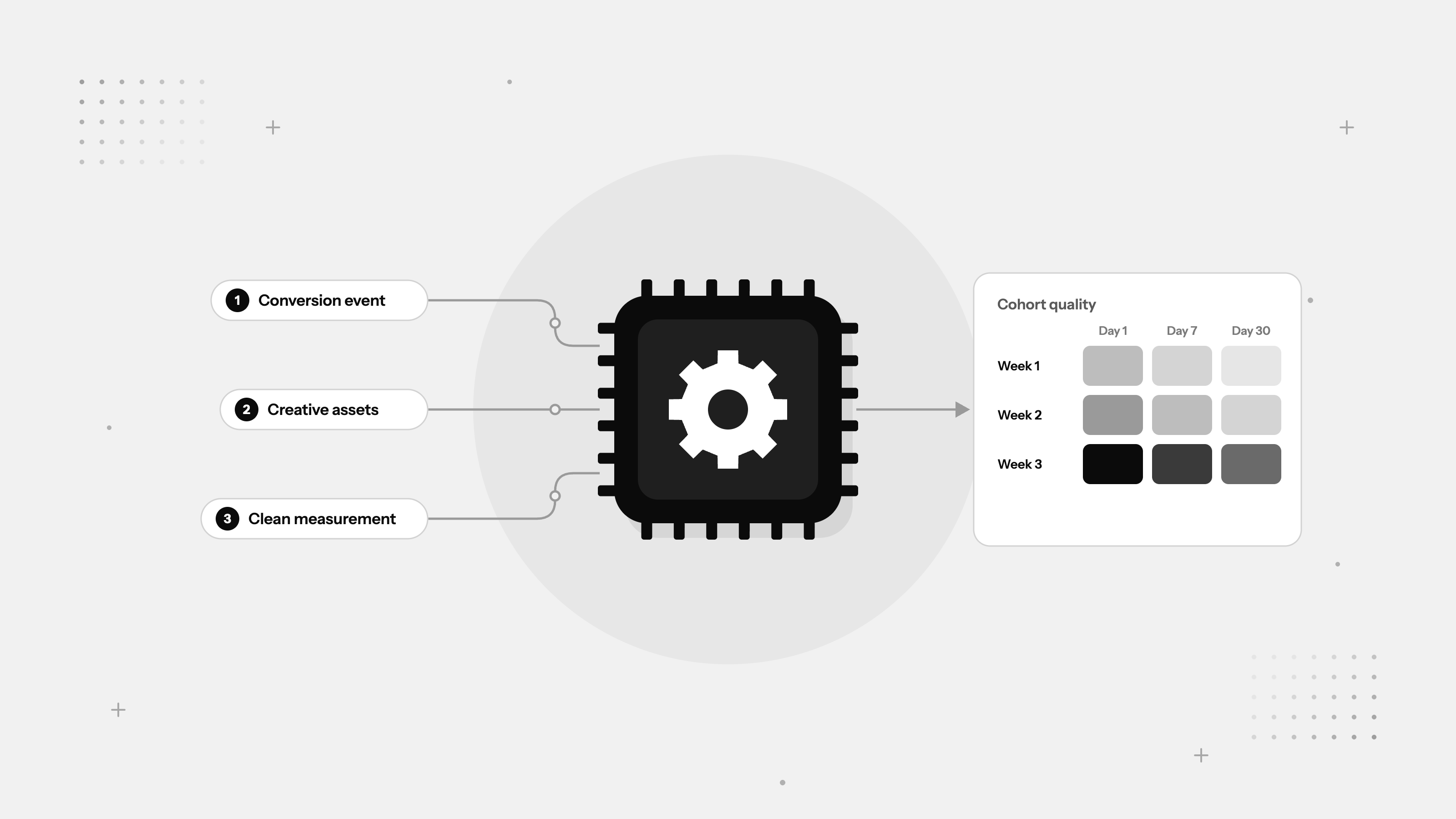
The metrics should follow the funnel. Engagement rate can reveal whether the opening earns interaction. Completion rate can show whether the experience is intuitive and satisfying. Click-through rate and install rate indicate whether the ad creates real demand. CPI, retention, and ROAS tell you whether that demand is commercially useful.
A low CPI is not a win if the playable is attracting users who churn immediately. Likewise, a playable with a slightly higher upfront cost may be the better asset if it sends higher-intent players into the game and improves payback. Media efficiency and creative quality belong in the same conversation.
Where Playables Fit in a Modern UA Mix
Playables should not replace every video, UGC-style concept, or gameplay capture asset. They work best as part of a broader creative system where each format does a different job.
Video can introduce character, narrative, social proof, and broad emotional stakes quickly. Gameplay capture can demonstrate depth and visual quality. Creator-led ads can make a game feel culturally relevant or socially validated. A playable asks the audience to participate.
That distinction makes playables especially useful when the gameplay loop is the product. Puzzle, simulation, strategy, casual, kids, and skill-forward titles often have a clear interaction that can be communicated in a short session. Narrative-heavy games and titles with complex onboarding may require more selective use. In those cases, a playable can still work, but it may need to sell a simplified adjacent mechanic rather than force the full game into an ad unit.
The operational requirement is speed. A winning playable concept should feed new hooks, difficulty variants, visual themes, and end-card treatments into the testing pipeline. Scrolling Media approaches custom HTML5 playables this way: as acquisition assets built from a data-led strategy and delivered ready to run, not as one-off interactive experiments.
The Real Standard: Does It Earn the Install?
A playable ad is successful when it creates a moment that feels good enough to continue. Not a misleading trick. Not an overbuilt demo. A focused sample of the game’s strongest promise, engineered to load quickly, respond instantly, and give paid media something worth scaling.
Start with the moment players already love, then make that moment impossible to ignore in the first few seconds. The best next test is rarely a bigger ad. It is a sharper hook.