Creative Strategy
Creative Strategy
Health App User Acquisition That Actually Scales
Health app user acquisition requires more than cheap installs. Build a creative, media, and measurement system that turns attention into paid retention growth.
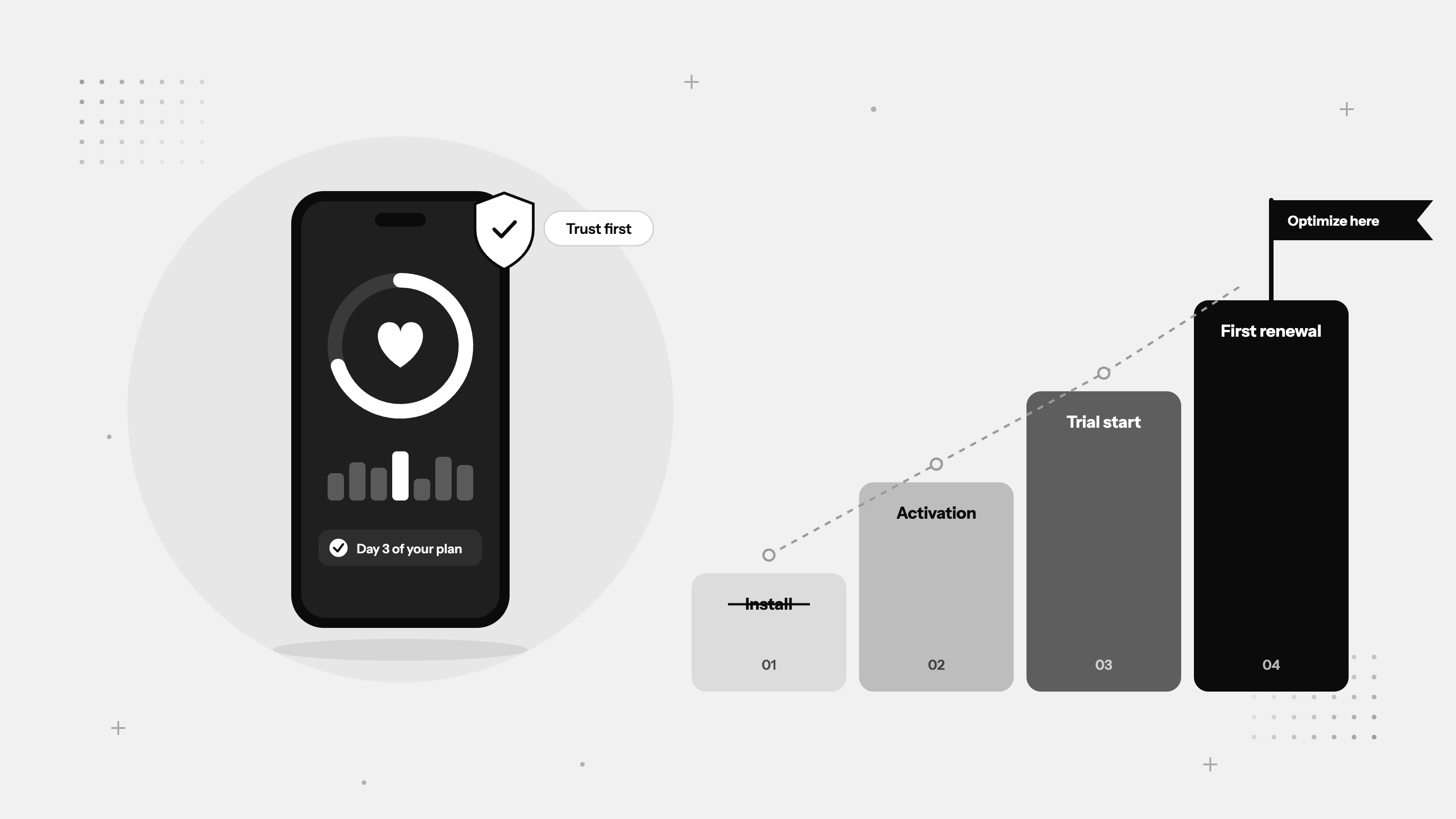
A $2 install is not a win if that user abandons onboarding, never starts a trial, or churns before the first renewal. Health app user acquisition gets expensive when teams optimize for the easiest conversion instead of the business outcome that funds growth.
For health, fitness, nutrition, meditation, and care apps, acquisition is a trust problem before it is a targeting problem. Users are being asked to share sensitive information, change a habit, or pay for a result they cannot fully judge until weeks later. Your ads, store page, onboarding flow, and retention model need to make the same promise - and prove it quickly.
Stop Optimizing for Installs
Install volume can make a dashboard look healthy while the underlying business gets worse. Broad app campaigns and low-friction creative often find users who will download almost anything. That can lower CPI while raising cost per trial, cost per subscriber, and payback period.
The right optimization event depends on your product and data maturity. A newer app may need enough install and registration volume to train platform delivery. A subscription app with stable event volume should move toward trial starts, activated users, or first purchases. Mature advertisers should go further, sending modeled value signals or optimizing toward users who reach a meaningful retention milestone.
The key is to define activation honestly. Opening the app is not activation. For a running coach, it might be completing a first plan and logging a workout. For a telehealth platform, it may be booking a qualifying appointment. For a nutrition app, it could be logging meals for several days or completing a personalized program.
This changes how media teams work. Instead of asking, "Which campaign delivered the most installs?" ask which audience, creative angle, and channel produced users who became valuable. The answer is often different.
Build Health App User Acquisition Around Trust
Health claims are high-stakes, and users can spot vague promises immediately. "Transform your life" is not a strategy. It is a generic line that creates skepticism and gives platforms little context for matching the ad to the right person.
High-performing creative makes the user recognize a real problem, see a credible path forward, and understand what happens next. That does not require fear-based messaging or unsubstantiated outcomes. It requires specificity.
A sleep app might show the 2 a.m. scrolling loop, then demonstrate a short wind-down session and explain how the plan adapts over time. A menopause app could lead with a creator naming a frustrating daily symptom, followed by a product walkthrough that shows education, tracking, and support features. A fitness subscription can show the first week of workouts rather than relying on unrealistic before-and-after imagery.
The trade-off is clear: dramatic claims may earn cheap attention, but grounded proof tends to earn better users. For regulated categories and brands handling health data, this is also a risk-management issue. Your legal, clinical, and privacy teams should define what can be claimed, what needs substantiation, and where disclosures belong before a concept enters scaled production.
Test Hooks, Not Cosmetic Variations
Changing captions, button colors, or background music is not a serious creative testing program. Those edits can be useful once a concept works, but they rarely reveal why a user converts.
Start with distinct acquisition hypotheses. One angle may target a moment of pain: "I had no idea why I felt exhausted every afternoon." Another may sell clarity: "My lab results were confusing until I could see the patterns." A third may focus on convenience, accountability, cost, personalization, or community.
Each concept should have a different opening, proof mechanism, visual structure, and call to action. If every ad starts with a polished product screen and a generic benefit, you are not testing creative. You are producing duplicates.
What strong health app ads tend to show
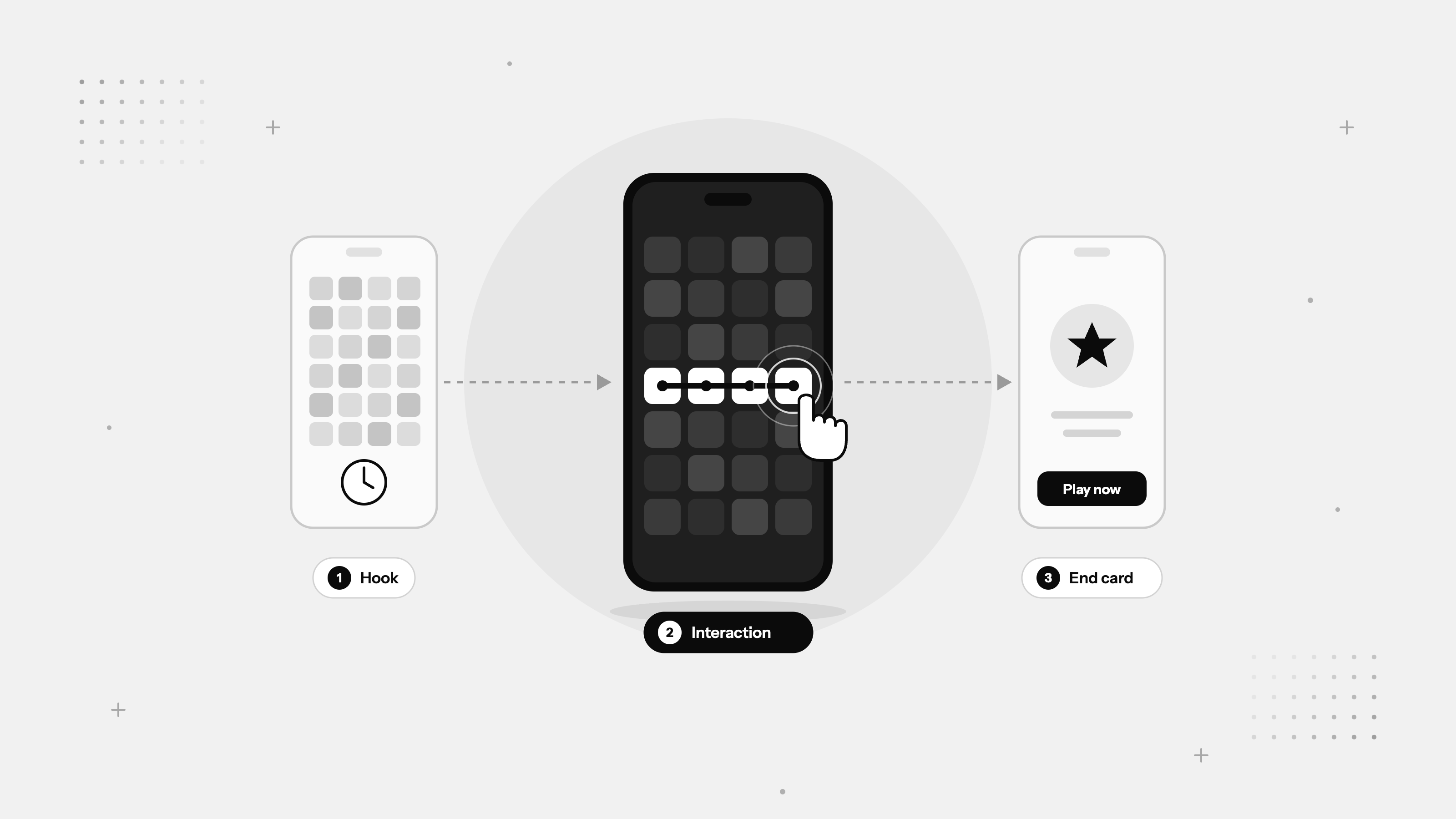
The most effective ads often combine human credibility with product evidence. A creator can articulate the lived experience, but the product needs to earn its place on screen. Show the assessment, the plan, the coach interaction, the progress view, or the feature that removes friction.
UGC is useful because it can feel native to TikTok, Reels, and short-form video inventory. It is not automatically credible, though. Over-scripted testimonials and exaggerated reactions create the same trust gap as polished brand ads. Use creators who can communicate a specific use case naturally, then give them a tight brief built around approved claims, required disclosures, and the actual user journey.
Production quality should match the platform and the message. A raw creator-style clip may be the right entry point for a habit app. A polished motion-led explainer may work better when the product is clinically complex or difficult to visualize. The goal is not to make every asset look the same. It is to make every asset ready to perform where it runs.
Match the Channel to the Job
No platform deserves budget because it is popular. It deserves budget when it can find qualified users at an acceptable cost and generate enough signal to optimize.
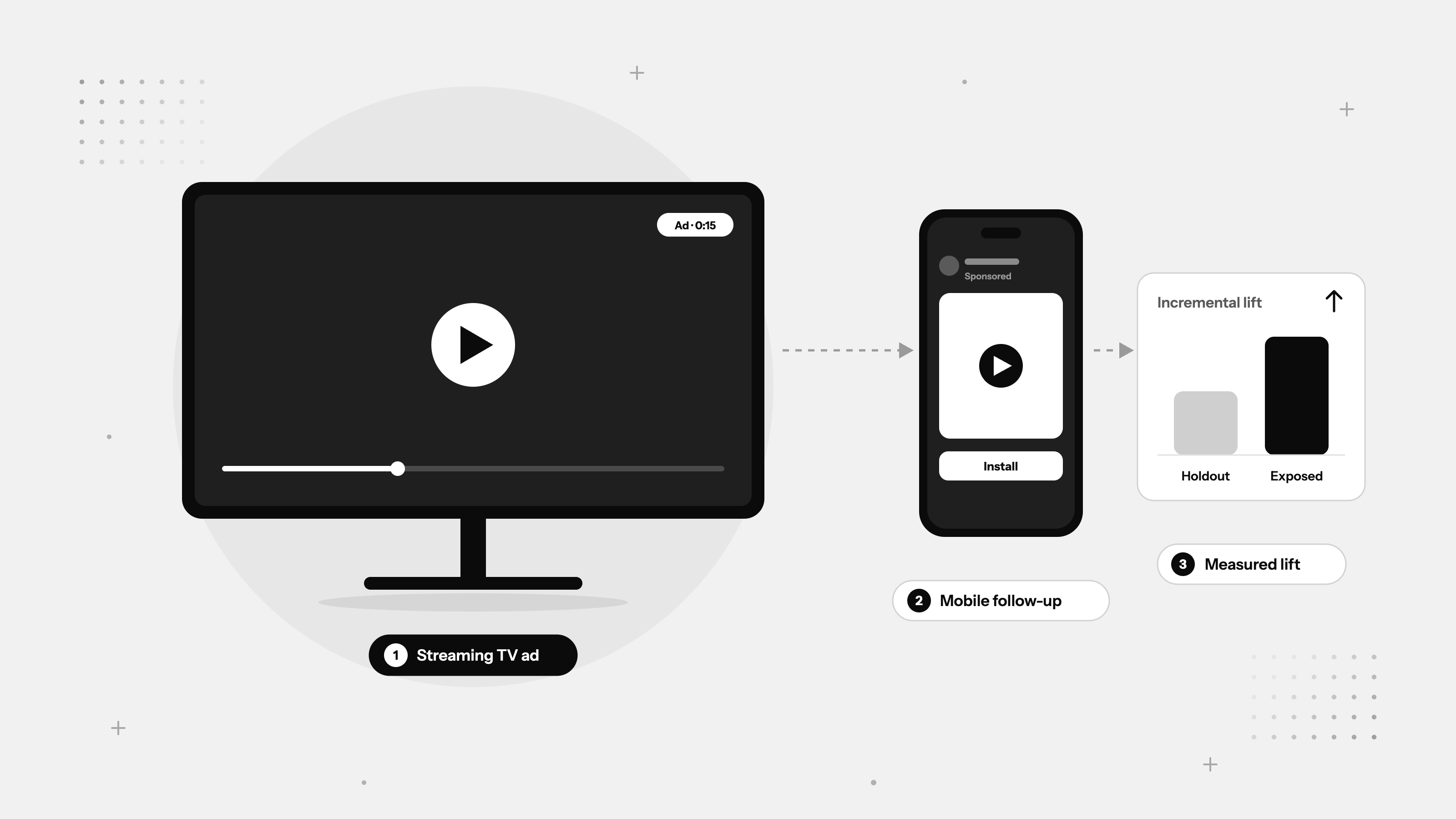
Meta remains powerful for full-funnel testing because it can scale creative iterations and reach users across broad life-stage, interest, and behavioral contexts. TikTok can create demand quickly when the creative understands the platform's pace, creator language, and comment-driven culture. Google captures higher-intent users searching for solutions, symptoms, routines, or alternatives. Connected TV can build familiarity for brands that need repeated exposure before asking for a trial.
Those channels do different jobs. Search may produce fewer users but stronger intent. Short-form social may generate efficient trial volume while requiring more creative turnover. CTV can raise branded search and conversion rates without being easy to credit in a last-click report.
This is why channel decisions should not be made from CPI alone. Review cost per activated user, trial-to-paid conversion, early retention, and modeled payback by source. If attribution is imperfect, as it often is, use a blend of platform reporting, mobile measurement data, cohort analysis, and controlled budget changes to find directional truth.
Fix the Handoff After the Ad
A great ad cannot rescue a confusing App Store page or an onboarding flow that asks for too much before delivering value. Acquisition and product teams need a shared view of where intent drops.
Your store listing should continue the strongest message from the ad, not introduce a completely new brand narrative. If the ad sells personalized meal planning, the first screenshots should show how personalization works. If the ad sells expert support, make the credentials and access model clear. Ratings, reviews, and pricing transparency matter more in health categories because users are evaluating trust alongside utility.
Then measure the onboarding path with the same discipline used for media. Where do users abandon? Which questions reduce completion? Does paywall timing help trial quality or simply suppress volume? There is no universal answer. A high-intent care app may benefit from qualification early, while a habit-building product may need to deliver a small win before presenting an offer.
Build a Creative Operating System, Not a Campaign Calendar
Creative fatigue is not a design problem. It is a production and decision-making problem. When a team needs three weeks to approve, shoot, edit, and launch a new concept, media buyers are forced to spend behind declining assets.
A better operating system starts with a monthly data-led strategy, then turns performance patterns into a prioritized production plan. Keep winners live, create variations around the winning mechanism, and introduce genuinely new angles before frequency and performance signal a bigger problem. Track results by hook, persona, offer, format, creator, and funnel event so the next brief is based on evidence rather than opinions.
That requires close coordination between strategy, creators, production, and paid media. Fragmented teams often produce attractive ads that cannot be scaled or scale campaigns with no fresh creative input. The work has to connect from concept through delivery.
The best next test is rarely the flashiest one. It is the one that answers the clearest commercial question: which believable promise brings in users who still see value after the first week? Build your next health app user acquisition sprint around that question, and let the answer determine what gets more budget.