Influencer Marketing
Influencer Marketing
Influencer Campaigns for Subscription Apps That Scale
Influencer campaigns for subscription apps can drive lower-cost trials and revenue when creators, offers, measurement, and paid scaling work as one team.
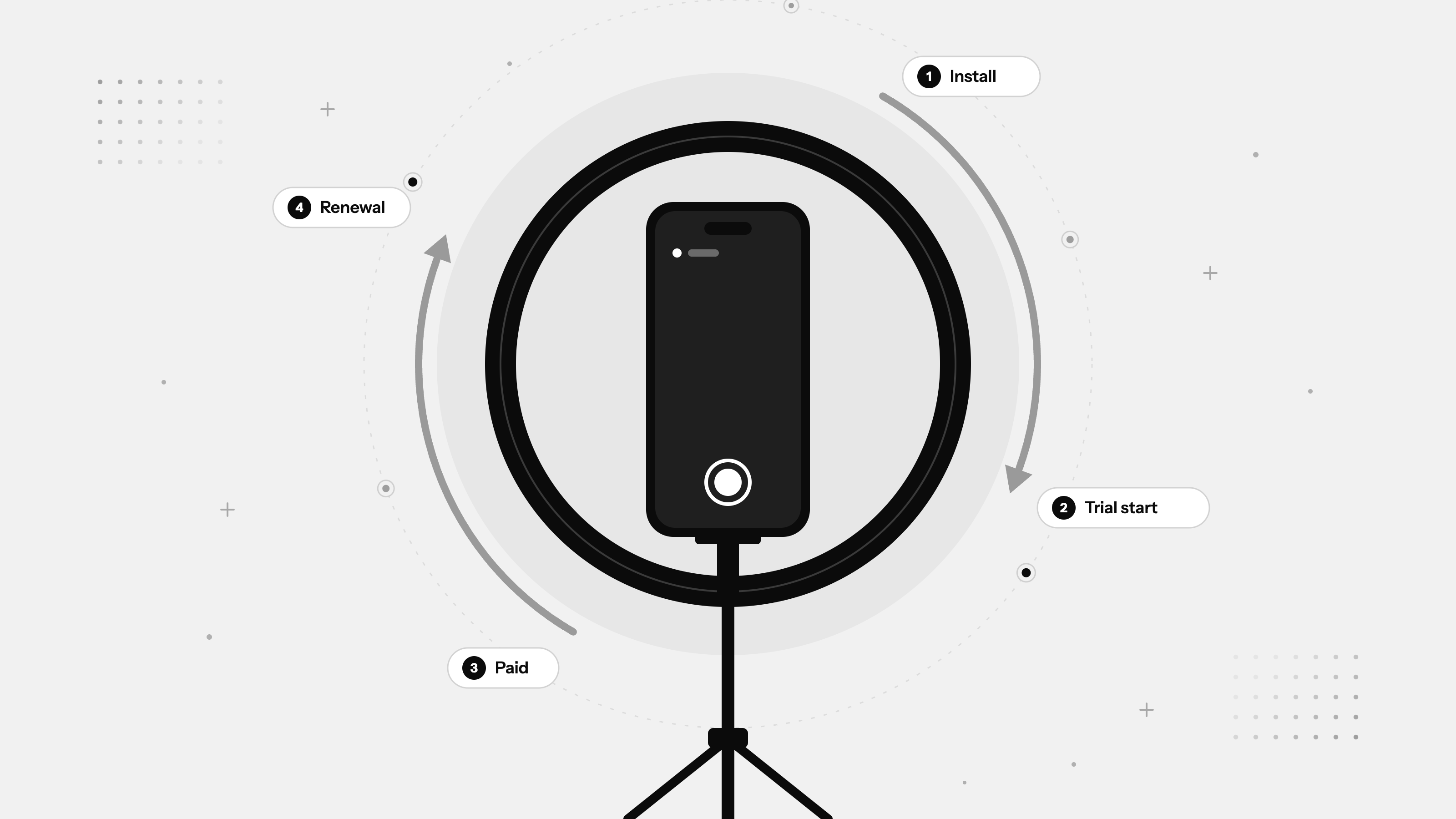
A creator can generate thousands of installs and still be a bad acquisition channel. For subscription businesses, influencer campaigns for subscription apps only work when they bring in users who activate, survive the trial, and keep paying. The install is the opening signal. Retention and subscriber revenue decide whether the campaign deserves more budget.
That changes the brief. You are not buying a post for reach or a creator for borrowed trust. You are building a performance asset that has to explain a product, overcome a payment objection, and produce a measurable action in seconds. The best programs connect creator selection, offer design, paid distribution, and cohort measurement from the start.
Start With the Subscription Moment, Not the Creator
Most subscription apps have a moment when the product becomes obviously valuable. A fitness app may deliver it after a personalized plan. A language app may deliver it when a user sees daily progress. A meditation product may deliver it after a genuinely calmer bedtime. The campaign needs to get prospective users close to that moment before it asks them to install.
This is where generic influencer briefs fail. “Talk about why you love the app” may sound authentic, but it often creates content with no acquisition mechanism. A stronger brief identifies the user problem, the proof point, the first meaningful action, and the offer. Then it gives the creator room to communicate all four in their natural style.
For a meal-planning app, the winning angle may not be “healthy recipes.” It may be “I stopped deciding what to cook at 6 p.m.” For a budgeting app, it may be “this showed me my recurring charges in under a minute.” Specific friction creates a better hook than broad category language.
The paid team should be involved before creators are contracted. If an idea cannot be adapted into a 15- to 30-second vertical ad with a clear opening, it is unlikely to become a scalable acquisition asset. Organic reach is useful, but paid amplification is where a proven concept gets a real chance to compound.
Build Influencer Campaigns for Subscription Apps Around Retention
Subscription acquisition has a delayed feedback loop. A campaign can look efficient on day one, then collapse when trial conversion or early churn arrives. That is why cost per install should never be the primary decision metric for a subscription app.
The measurement model should connect creator-level delivery to downstream quality. At minimum, track installs, account creation, trial starts, paid conversions, first renewal, and revenue by cohort. Depending on the category and billing cycle, you may need 30-, 60-, or 90-day retention data before declaring a creator or concept a winner.
This does not mean waiting three months to make every decision. Use leading indicators to make fast calls: landing page conversion, onboarding completion, trial start rate, and early product engagement. Then validate those calls against subscriber quality as the cohort matures. Fast creative testing and disciplined revenue measurement can coexist.
A simple way to frame it is this: a higher-cost creator can be the better buy if their audience activates faster, cancels less, and produces stronger payback. Conversely, low-cost installs from a broad entertainment audience can become expensive noise if they never reach the product’s value moment.
Match Creator Audience to the Job the App Does
Follower count is a weak proxy for fit. The right creator is someone whose audience already recognizes the problem your app solves. That can mean a postpartum fitness creator for a mobility app, a busy parent for a family organization app, or a career creator for a language-learning product aimed at professionals.
Audience alignment should go beyond demographics. Look at comment patterns, recurring topics, content format, and the level of trust the creator has earned. If their followers ask for advice and report back on results, that creator may be more valuable than one with larger passive reach.
Also consider the creator’s ability to demonstrate the product. Subscription apps frequently require a behavioral shift, not a one-time purchase. Creators who can show a routine, a before-and-after workflow, or a personal experiment are often better equipped to make the app feel necessary.
Make the Offer Clear Without Training Users to Churn
A free trial is not automatically a compelling offer. If every competitor offers seven days free, the user needs a reason to start now. That reason may be a limited challenge, a structured onboarding path, a seasonal goal, or a creator-led use case that makes the first session feel immediately relevant.
Be careful with aggressive discounting. A steep introductory price can improve trial volume while attracting users who cancel as soon as the promotion ends. It depends on the product category, price point, and retention curve, but the goal is not maximum trial starts. The goal is profitable subscriber growth.
For many apps, the best creator message is product-led rather than price-led. Show the first result. Explain who the app is for. Then state the trial or promotion clearly at the close. Users should understand what they get, when they will be billed, and why continuing is worthwhile. Ambiguity may lift short-term conversion, but it damages trust and creates refund pressure.
Create for Paid Scale, Not Just Organic Posting
The strongest creator partnerships produce two outputs: organic distribution and a usable library of paid creative. Treating these as separate projects is slower and more expensive than it needs to be.
Secure usage rights that match the planned media strategy. If you intend to run creator content on Meta, TikTok, or YouTube, define the channels, duration, edit rights, whitelisting terms, and renewal structure before production begins. A high-performing post with no usable rights is not a scalable asset.
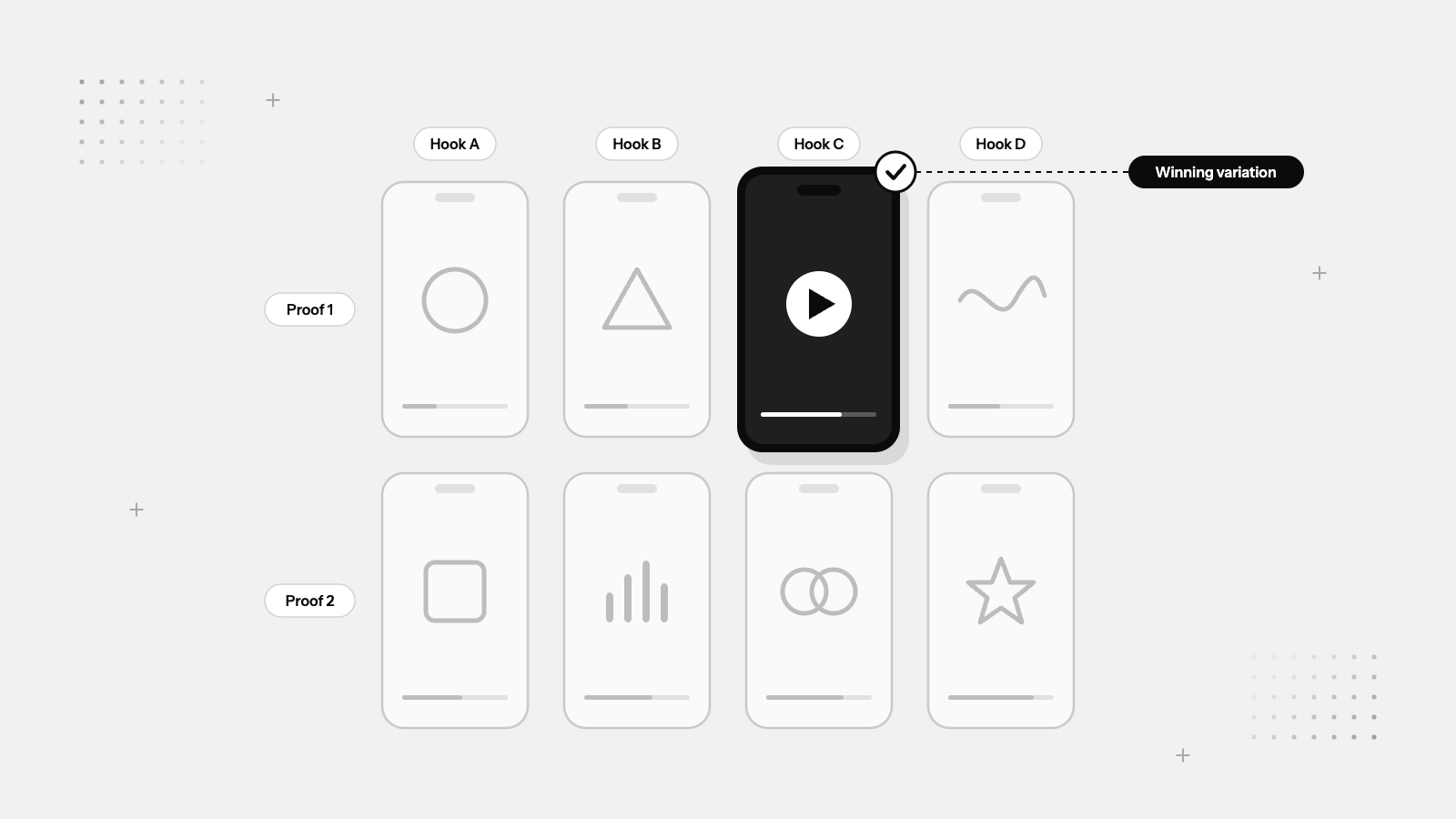
Build variation into the shoot or briefing process. You need multiple hooks, opening frames, claims, calls to action, and cut lengths. One creator can often produce a meaningful test matrix when the concept is planned correctly. Ask for the same core story told through different openings: a direct pain point, a surprising result, a routine-based demo, and a skeptical objection.
This is where a connected growth team has an edge. Scrolling Media treats creator footage as performance inventory, not a one-off brand deliverable. The content is built to be cut, tested, and deployed against live acquisition goals.
Test Hooks Before You Test More Creators
When performance drops, teams often assume they need fresh talent. Sometimes they do. But creative fatigue can be a hook problem, an offer problem, or a distribution problem.
Test the first three seconds aggressively before expanding the creator roster. Does the ad open on a recognizable frustration? Does it show the product in use immediately? Is the creator’s personal credibility doing work, or is the script taking too long to get to the point?
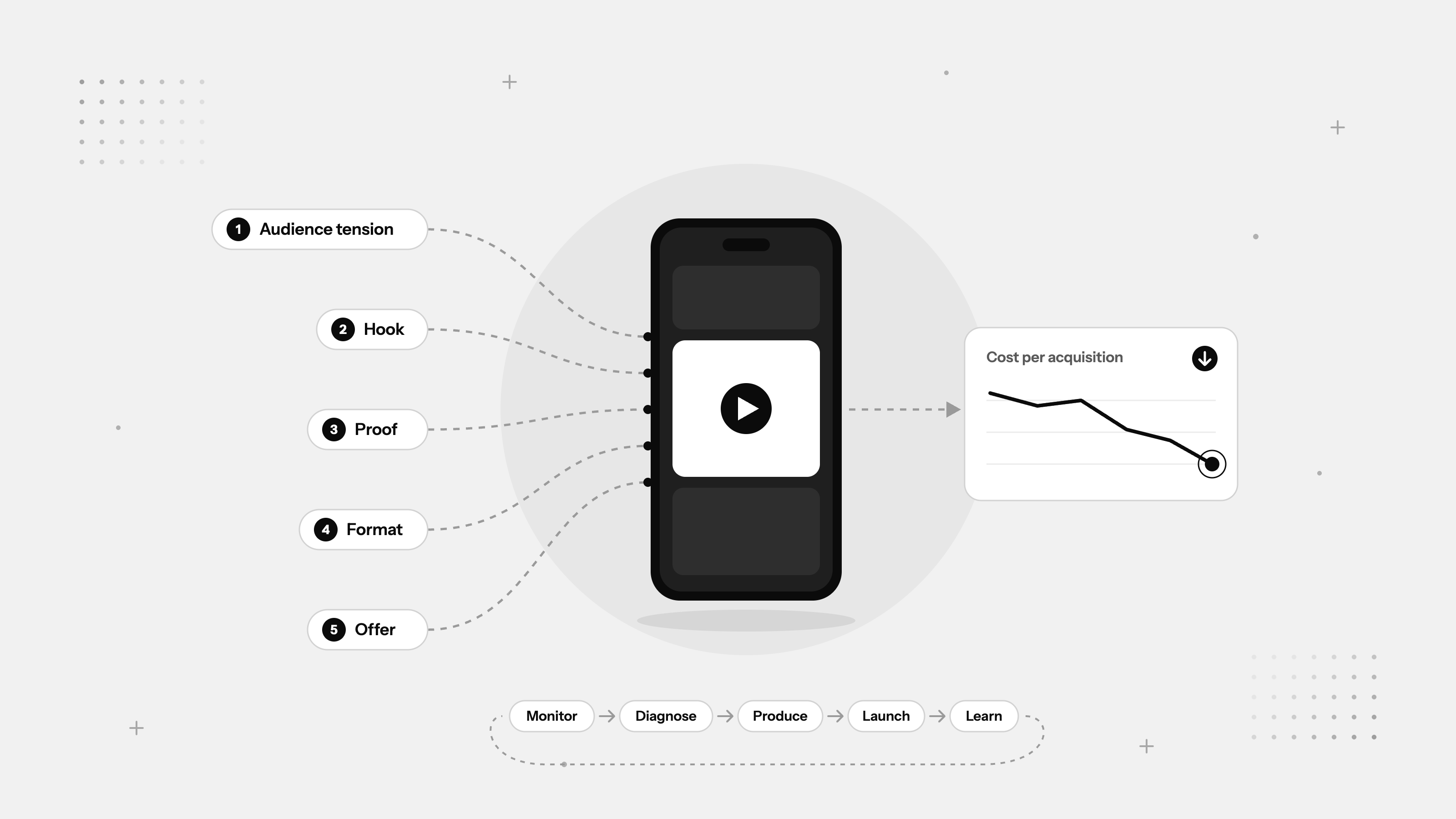
A useful testing cadence includes four distinct creative variables:
- Hook: the first claim, visual, or problem statement.
- Proof: demonstration, testimonial, product screen, or outcome.
- Offer: trial framing, challenge, pricing context, or urgency.
- Call to action: install now, start a plan, take an assessment, or try the first session.
Keep the product promise consistent while testing these variables. If every asset changes the audience, message, offer, and edit style at once, you learn very little from the result.
Use Attribution as a Decision System
Influencer attribution is imperfect, especially when a user sees a creator organically, later sees a paid ad, and installs through an app store search. The answer is not to abandon measurement. It is to use multiple signals and avoid pretending that any single dashboard tells the entire story.
Use creator codes and tracked links where appropriate, but evaluate them alongside platform reporting, mobile measurement partner data, incrementality tests, branded search movement, and cohort revenue. For larger budgets, holdout tests can reveal whether a creator-led push produced net-new demand or simply captured users who would have converted anyway.
Attribution also needs operational discipline. Maintain consistent naming conventions across creators, concepts, markets, and offers. Connect creative IDs to ad sets and downstream cohorts. Without clean structure, a team ends up with opinions about which creator worked instead of evidence.
Pay Creators for What You Need
Flat-fee deals are useful for predictable production and access to the right talent. Performance bonuses can add alignment when tracking is reliable and the creator has meaningful influence over the result. A hybrid structure is often practical: a fair fixed fee for the work, plus bonuses tied to qualified trial starts, paid subscribers, or another agreed quality threshold.
Do not force every creator into an affiliate model. Established creators may reject it, and smaller creators may accept terms that push them toward overpromising. The commercial structure should protect authenticity while rewarding outcomes.
The better question is not, “What is this post worth?” Ask, “What rights, variations, testing value, and subscriber revenue could this partnership produce?” That is the unit economics conversation that turns influencer marketing into an acquisition channel.
Start with a controlled creator cohort, a clear hypothesis, and enough paid budget to validate the best assets. Then scale the messages that produce retained subscribers, not the posts that produce the loudest launch-day numbers.