Creative Strategy
Creative Strategy
Meta Versus TikTok Acquisition for Growth Teams
Meta versus TikTok acquisition is not a channel choice. Compare intent, creative, measurement, and spend allocation to scale efficient growth for US brands.
A $50,000 monthly paid social budget can produce radically different outcomes on Meta and TikTok - even when the targeting, offer, and landing page are identical. The reason is simple: Meta versus TikTok acquisition is not a contest between two media buying dashboards. It is a decision about how your creative creates demand, how quickly it burns out, and where each platform can find incremental customers.
For growth teams chasing installs, trials, purchases, or subscriptions, the wrong question is, “Which platform has the lower CPA?” The right question is, “Which platform can profitably scale this offer with the creative engine we can actually sustain?”
Meta Versus TikTok Acquisition Starts With User Behavior
Meta captures a lot of existing intent. People may not open Instagram or Facebook intending to buy your product, but they are accustomed to evaluating brands, clicking product pages, reading comments, and completing a purchase without leaving the environment for long. Its mature optimization systems also have years of conversion signals behind them for most established advertisers.
That makes Meta especially effective when a product has clear demand, a well-defined conversion event, and enough historical data to train toward it. A subscription wellness app with a proven trial-to-paid funnel, for example, can often use Meta to find increasingly precise pockets of high-value users. Strong retargeting, catalog ads, testimonials, comparison creative, and offer-led messaging all have room to work.
TikTok behaves differently. It is an attention market before it is an intent market. Users arrive to be entertained, surprised, informed, or sent into a rabbit hole. An ad earns distribution and conversion only if it feels like content worth watching before it asks for action.
That creates an opportunity for brands with a compelling product moment. A game with satisfying gameplay, a consumer app with an unexpected use case, or a health product with a sharp before-and-after story can create demand on TikTok that did not exist five seconds earlier. But the platform is less forgiving of static brand language, polished commercials without a point of view, and creative that waits too long to show why someone should care.
Creative Is the Real Buying Strategy
Media teams often treat creative as an input to channel strategy. In performance acquisition, it is the strategy.
On Meta, a broad audience plus conversion optimization can work exceptionally well when the creative communicates the offer fast. The winning asset might be a creator testimonial, a founder-led explanation, a product demo, a native-looking Reel, or a direct-response video built around price, proof, and urgency. Meta creative can be polished, but it still needs a visible hook in the first seconds and a reason to believe before the call to action.
TikTok requires a more aggressive commitment to platform-native storytelling. The first frame needs tension, recognition, aspiration, or curiosity. “I thought this feature was a gimmick until…” will usually beat “Introducing our revolutionary app.” The difference is not cosmetic. One format gives the viewer a reason to stay. The other announces that an ad has begun.
For mobile game studios, the distinction becomes even clearer. Meta can scale gameplay footage, reward loops, character progression, and proven UGC angles. TikTok can turn a single unusual mechanic, a fail moment, or a creator challenge into a high-volume acquisition concept. Playable ads may also be a better fit for qualified, hands-on demand generation where the game experience itself is the strongest sales argument.
The best teams do not force one master asset across both platforms. They build a concept, then adapt its hook, pacing, on-screen text, sound, proof sequence, and CTA for the placement. One idea can travel. One edit usually cannot.
Stop Testing Ads. Start Testing Hooks.
A creative test is not meaningful because it has a new background color or a different end card. Those changes rarely explain why a user converted.
Test the variables that change the viewer’s interpretation of the offer: the opening line, the problem being named, the product demonstration, the creator persona, the proof mechanism, and the emotional payoff. A finance app might test “I stopped budgeting manually” against “This found $312 in bills I forgot about.” The product is unchanged. The reason to pay attention is completely different.
TikTok usually demands more hook variation at a faster cadence. Meta rewards creative breadth too, but it can sometimes scale a durable winner longer when the offer and audience match are strong. That does not mean Meta is immune to fatigue. It means the decay curve, audience response, and required production rhythm differ.
Where Each Platform Tends to Win
There is no universal winner, but patterns are useful when planning a test.
Meta is often the stronger foundation for advertisers with reliable conversion tracking, a mature landing page or app-store funnel, and a need to scale across prospecting and retargeting. It is particularly valuable when a product has multiple audience segments, higher consideration, or a clear path from content exposure to conversion. Its breadth also makes it easier to develop a full-funnel system rather than a single top-of-funnel campaign.
TikTok often wins when the product can earn attention before it earns intent. That includes visually demonstrable products, culturally relevant consumer brands, games, apps with an instantly relatable pain point, and offers that benefit from creator credibility. It can also surface new audiences that Meta has not reached efficiently, especially when a brand’s Meta account has become dependent on familiar creative angles.
Neither rule is absolute. TikTok can drive efficient direct response for established brands. Meta can introduce entirely new products to cold audiences. The performance ceiling depends on product-market fit, signal quality, conversion friction, creative throughput, and whether the account has enough budget to let the system learn.
Measurement Can Make a Good Channel Look Bad
Last-click reporting regularly understates TikTok’s contribution. A user may see a creator-style ad, search the brand later, then convert through Meta retargeting or a branded search campaign. If each platform is judged only by the final click, TikTok appears expensive while Meta takes credit for demand it helped capture.
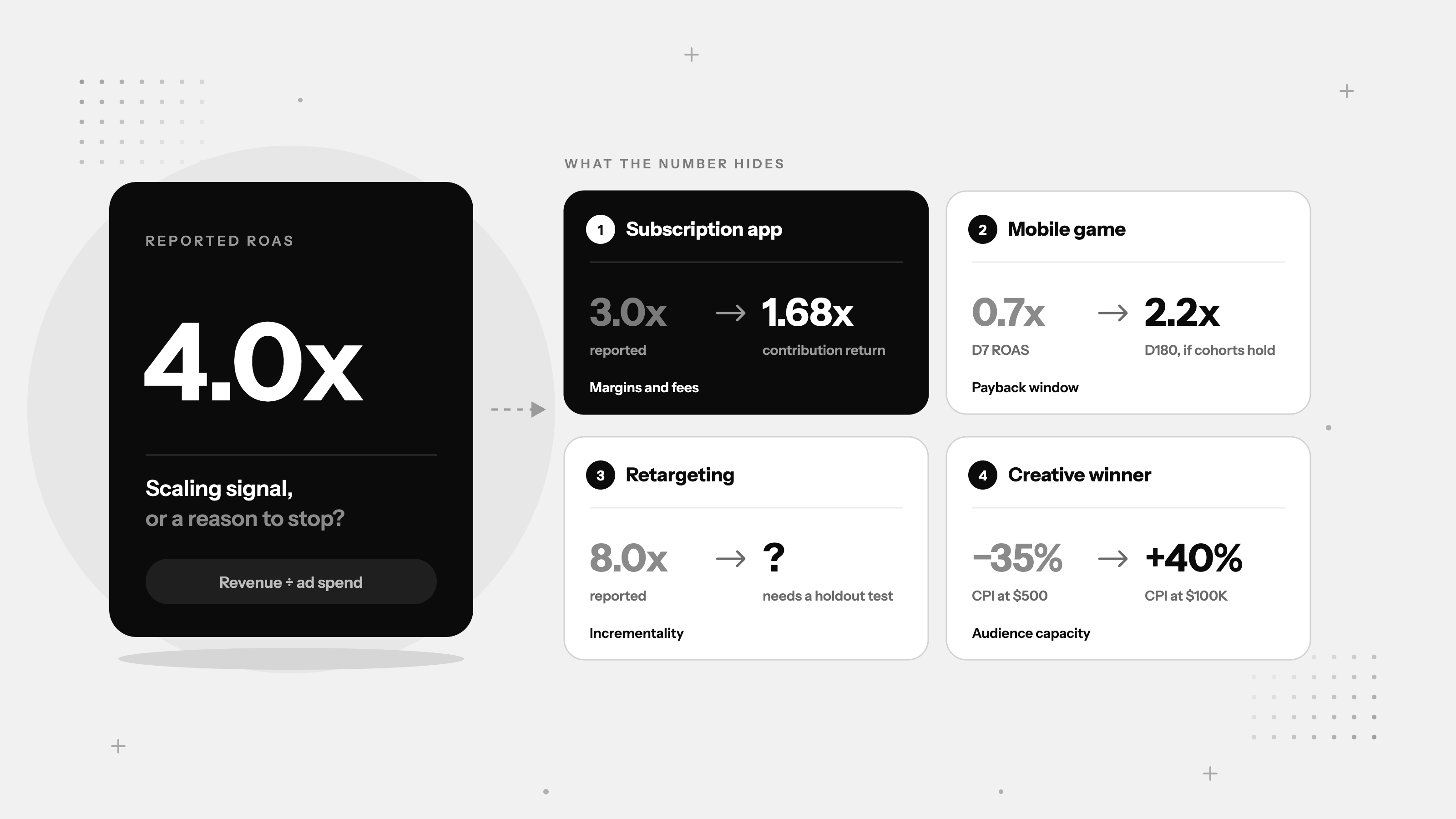
That does not mean teams should give TikTok a free pass on efficiency. It means they should evaluate it with a more disciplined measurement plan. Track platform CPA and ROAS, but also watch blended CAC, conversion rate by cohort, branded search movement, new-customer share, retention, and incrementality where budget allows.
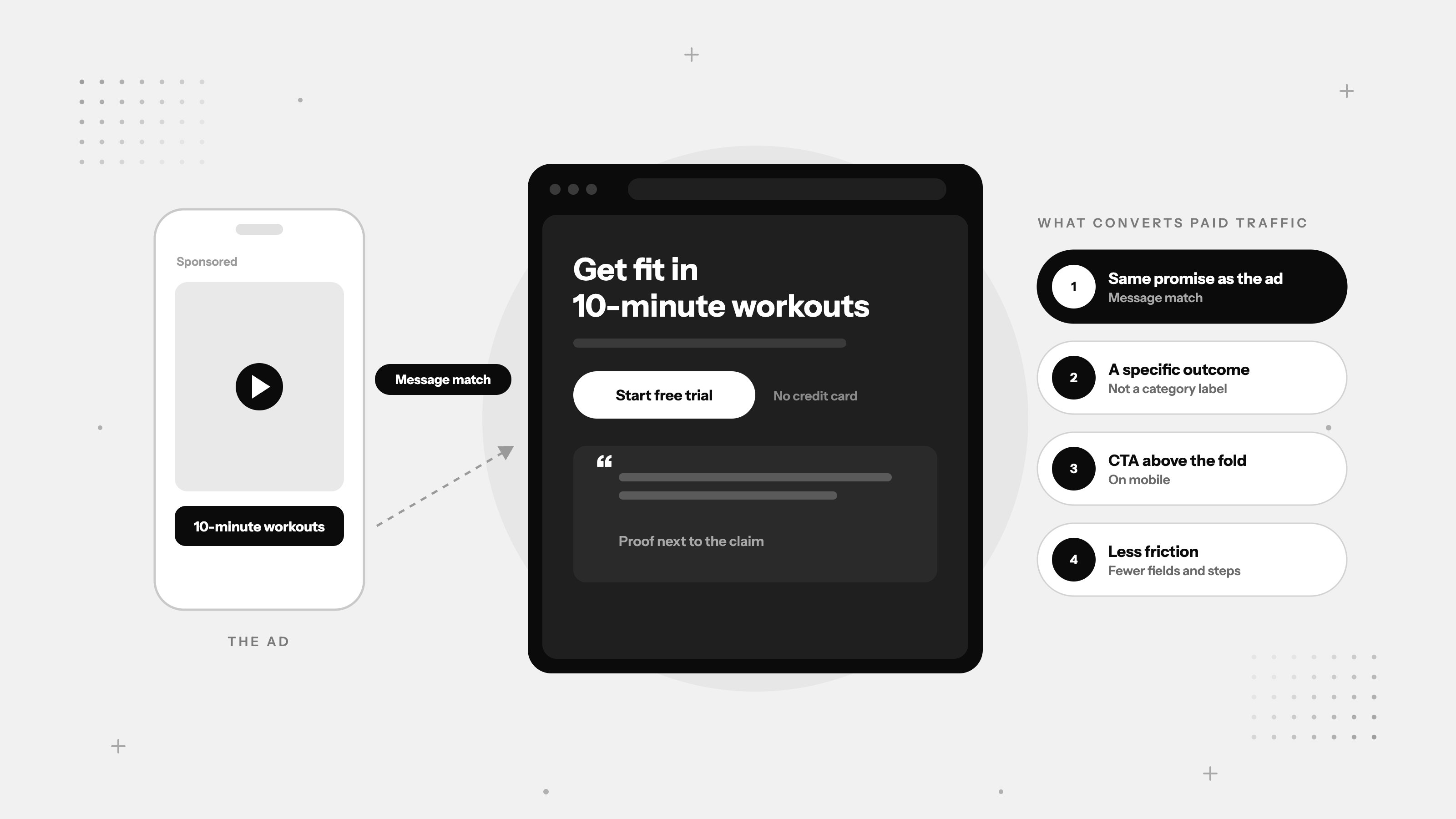
For apps, optimize beyond the install. A low CPI channel is a liability if its users fail to register, trial, subscribe, or retain. Send post-install events back to the platforms, validate event quality, and compare downstream cohorts. The cheapest install is not the goal. The goal is the most profitable acquired user at scalable volume.
A Better Budget Allocation Model
Do not split spend 50/50 because it feels balanced. Allocate budget based on each platform’s current role, then adjust from evidence.
For an advertiser beginning with limited spend, Meta may deserve the larger initial allocation because it can provide more stable conversion volume and clearer retargeting coverage. TikTok should still receive enough spend to test multiple concepts, not just one asset that fails after two days. Underfunded channel tests produce underinformed conclusions.
For a brand already spending heavily on Meta, TikTok becomes a practical source of creative and audience diversification. Start with a focused acquisition test, build several native concepts around distinct hooks, and give the platform time to identify patterns. If it finds efficient incremental volume, scale in stages while monitoring blended performance rather than chasing a screenshot-level CPA win.
A useful operating model is to maintain a dependable Meta baseline while using TikTok as a structured growth test bed. When a TikTok angle proves it can create attention and conversions, adapt the underlying insight for Meta. When a Meta offer consistently converts, rebuild it for TikTok with a creator-native entry point. The channels should inform each other, not operate as separate creative silos.
The Operating Constraint Most Teams Ignore
TikTok acquisition is rarely limited by targeting. It is limited by the ability to produce enough credible, varied creative. Meta eventually reaches the same constraint, particularly as spend rises and audience saturation sets in.
That is why an integrated creative, influencer, and media buying workflow matters. Strategy identifies the next hypothesis. Production turns it into platform-ready assets. Media buying finds the spend signal. Then the cycle repeats before fatigue turns a winner into an expensive habit.
Scrolling Media treats that loop as one growth system because it is one. A media buyer cannot scale what the creative team cannot refresh, and a creative team cannot improve what it cannot measure.
Put both platforms to work, but make them earn their budgets. Build for how users actually consume each feed, optimize toward valuable customers instead of cheap events, and keep enough creative in market that the next winning hook is already being tested.